Category: Assignment #2

Answers for Assignment #2 – Content Thinking, Headlines & Application

  • Part B: Question 4 –  Second-Year Course Headline

    From First Year Basics to Real Advertising: What to Expect in Second Year

    This headline communicates relevancy to first year students who are curious about what to expect in second year. Right away this headline targets the first year students by saying “First Year Basics” and mentioning what to expect when they get to second year.

    By using “Real Advertising”, I wanted to communicate that students will begin to learn practical advertising skills that are more in depth. This headline is meant to create a sense of clarity and progression, giving students the reassurance that if they keep going, they will learn amazing skills that will jumpstart them to their career in this field.

  • Part B: Question 3 –  SCC Advertising Program Headline

    From Classroom to Career: How the SCC Advertising Program Prepare Students for Real Industry Jobs”

    According to the instructions, I was to create a headline targeting graduating high school students. Apart from that there was no information given about the course like the internships opportunities or career opportunities.

    Normally when writing a headline targeting students to inform them about a college program, especially one like the SCC advertising program, I would want to focus on what makes the program worth it for high school students like the internships and the real life industry experience. I had to put myself in those students’ shoes and think about what they were looking for in post secondary when choosing a program. And like me, many students want the reassurance that education will lead them to a fulfilling career afterwards and that was the information I used to write the headlines.

    With the little information I had to create a headline targeting high schools about the ACC Advertising program, I wanted to make a headline that immediately communicates value and relevance to the local graduating students. Since my headline is being posted online, it acts as a decision trigger. It can trigger readers to make a decision in seconds to click the article.

    Starting the headline with “From Classroom to Career” I was able to frame the program as a pathway to enter the advertising industry and this helps students immediately want to learn more since one of their biggest concerns is wanting to know if the program will actually help lead them job opportunities. The second part of the headline also reinforces the value of the program and reduces uncertainty. Overall, I created this headline to capture the students attention while still remaining clear and trustworthy. 

  • Part B: Question 2 –  Headline Intent vs Outcome

    The headline I chose is “Gen Aren’t the Problem – It’s How We Talk About Reading”. 

    The primary intent for this headline is to bring clarity to readers and signal relevance while also triggering curiosity. The headline quickly shifts the blame in an ongoing debate that is currently happening by suggesting that Gen-z are not the problem when it comes to reading. It’s signalling readers to pause and think for a moment while they read the content to understand what the writer meant. 

    This headline is designed to trigger curiosity for readers to pause and think if this article is worth their time. In the online world readers have to be entertained in seconds or they’ll go elsewhere. This headline stands out to those that’s already looking for new information and or looking into a topic they are already interested in.

    This intent is appropriate to my target audience because it is mainly targeting readers who are already familiar with the topic and are in online discussion having these conversations about Gen-z, literacy, and social media. These audiences are already aware of the stereotype that gen-z can’t read so therefore this headline will catch their attention and tap into it directly. 

  • Part B: Question 1 –  Headline Variation

    Headline #1 

    “Why do people think Gen Z can’t read Wuthering Heights?”

    This headline leans into starting a conversation, it draws in the kind of curiosity that gets people curious to what the article has to say. Instead of directly making it obvious that the headline is defending Gen-Z, it introduces a question that signals controversy without giving out any explanation. This headline suggests that there is a larger discussion being made about the book and encourages readers to click and understand why. 

    In class, we discussed how headline functions as a decision triggers in articles and should be able to encourage readers to decide in seconds whether they wanna engage with your article or not. The question headline I wrote creates a sort of knowledge gap that gives readers a nudge of uncertainty and makes them curious. This headline works because it acts as a shiny hook that lures attention. It creates curiosity without misleading the reader since the article genuinely go into details about debate around reading difficulty to make readers understand the article perspective. 

    Headline #2 

    “Gen-z Aren’t The Problem – It’s How We Talk About Reading”

    This headline shifts the blame. Instead of positioning Gen-z as the problem, it frames it into a conversation and tells you why Gen-z isn’t the problem. The headline comes from a more argumentative function however if you read the article, you can understand why the headline made that claim. This is a form of psychological bias.

    In class we discussed how negative framing and contrast can increase engagement because they claim bold assumptions that can be seen as controversy. This framing is more strategic than just a bunch of words put together. It allows readers to see why “x” isn’t the problem and encourages readers to reassess their thinking.

    Headline #3

    “Gen-Z isn’t “Too Dumb” to read classics, here’s what’s happening”

    This headline uses emotional language and adds clarification for those that want more. The “Here’s what’s happening” tells readers straight away that the article will provide context, not be biassed and defend Gen-Z. It speaks directly to readers providing clarity and encourages them to feel a part of the conversation and click.

    In class we discussed that headlines should be a bit descriptive and stating what the purpose of it is. This headline works because its descriptive-ness defines who their audience is and clicking to find out the resolution. It uses an emotionally charged phrase but maintains to reassure readers that the article will provide a detailed explanation. 
  • Part A: Question 3 –  Click Motivation

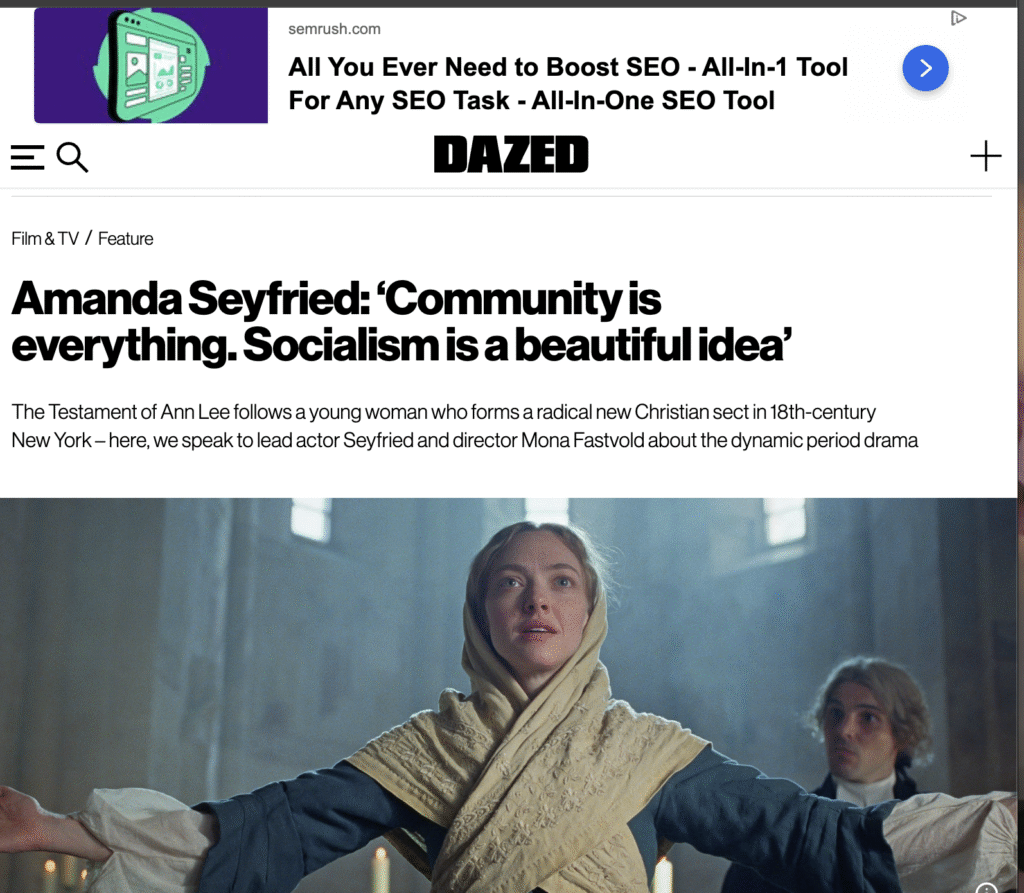
    Amanda Seyfried: “Community is everything. Socialism is a beautiful idea”

    – Published by Dazed Digital

    I clicked on this headline because it hit me with something slightly provocative as I don’t usually see movie interview titles this way. I was not aware that this headline was talking about the movie quote and was sort of surprised when I read the article. I initially thought the headline was expressing Amanda political views not  promoting a film so I clicked to see what the real story was about. 

    This headline motivated my click because of its unexpected framing and emotional signaling which is exactly what triggers headline clicks. The headline using a direct quote from the movie with a controversial idea that  “socialism is a beautiful idea” sparked my curiosity, it triggered an immediate decision for me. According to our lectures, an effective headline should generate a cognitive dissonance that makes users pause and read the headline first before deciding to engage with it, which is exactly what I did. I wanted to read if the content of the article matched the headline. The headline felt authentic and compelling without giving out any information except what was written. Its framing pulls readers in emotionally and politically. 

  • Part A: Question 2 – Accuracy & Representation

    Yes I believe the headline was an accurate representation of the article’s content. The article went into thorough details and addresses the online conversation that Gen-Z can’t read, especially after mixed reviews of the movie “Wuthering Heights”. Before the movie came out, many book lovers went and got the book to prepare them for the movie, however a lot of them who are Gen-Z could not finish the book and asked their audience if they’re dumb because they can’t seem to finish the book. The headline brings attention to a different perspective, one that many in these online discussions are refusing to see. The writer included several statistics in her argument to examine the debate.

    In our class discussion, we talked about how a headline’s job is to attract attention but not at the expense of trust. Trusting a headline without reading the article is not very good because most headlines can be misleading and don’t deliver what it’s actually claiming. However in this case, the headline draws curiosity but also back its claims through statistical facts to justify the headline. 

  • Part A – Question 1 – Headline Resonance

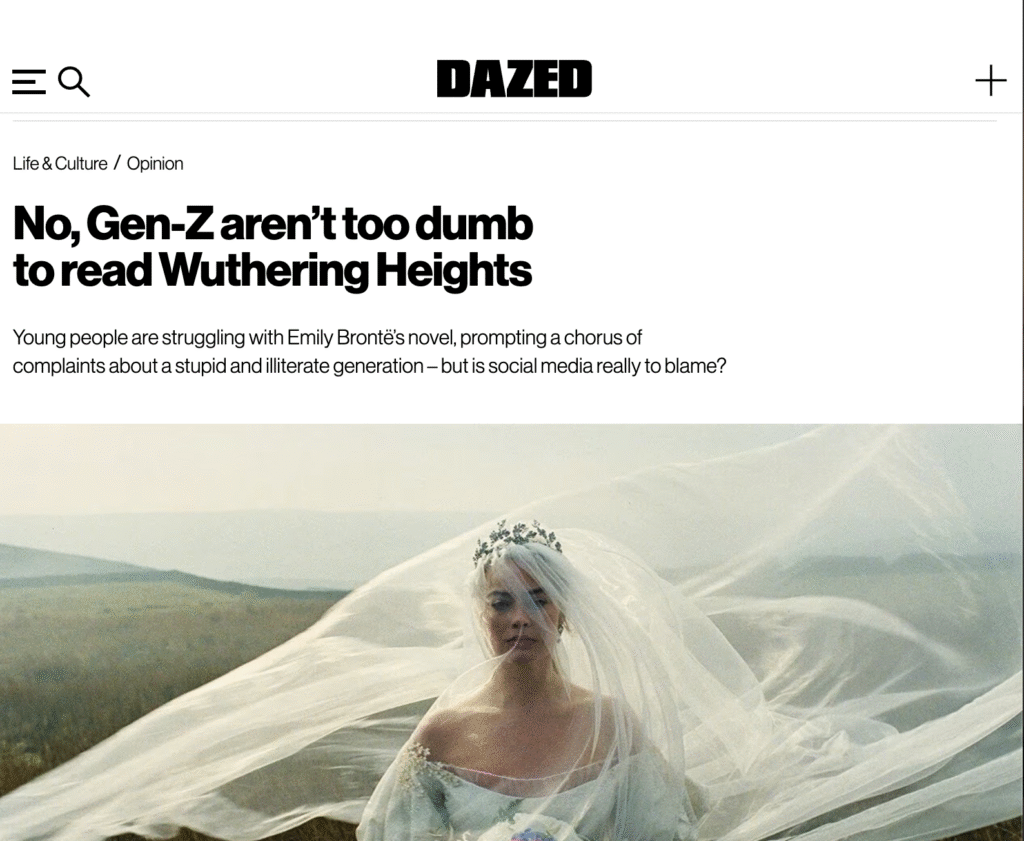
    “No, Gen-Z aren’t too dumb to read Wuthering Heights.”

    – Published by Dazed Digital

    This headline immediately caught my attention because of how controversial it sounded and that intrigued me to want to read more. The phrase “No Gen-Z aren’t too dumb” feels like a response to a current ongoing issue that the western society has been talking about. Lately there’s been discussion about if Gen-Z are dumb, lazy and all of the horrible things the media. As a Gen-Z who’s constantly seeing generations getting criticized online, this headline felt personal and engaging.

    This headline is effective because it uses elements like contrast and psychological tension because it triggers strong attention in online spaces. The headline starting off with “No” automatically signals there’s  a conflict and that creates a curiosity gap for readers. It makes them want to read the article and understand what claim is being pushed back against. It also identifies its audience by calling out Gen-Z directly which felt like a specific call out instead of keeping it broad. The choice of wording was emotionally charged and acts as a “shiny hook” which encourages readers to quickly click before moving on. Overall this headline choice of words was perfect because it draws fast attention and curiosity because it frames the article as an argument rather than just for information.